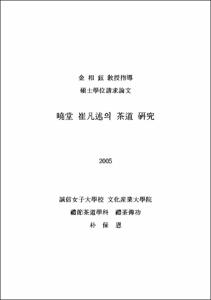
曉堂 崔凡述의 茶道 硏究
- Alternative Title
- A study on Hyodang Choi Pom Pom-sul’s the Way of Tea
- Abstract
- 僧侶이면서 獨立運動家이기도한 曉堂 崔凡述은 우리나라의 현대 차문화를 大衆化 하고 이론적으로 體系化 시킨 인물이다.
曉堂은 1916년 13세에 다솔사 월초 스님의 법하에 입산, 출가하였고 1917년 해인사에서 임환경선사로부터 戒를 받았다. 불교의 사상적 영향은 주로 元曉, 卍海 등에게서 받았으며, 차의 이론과 실제적 차생활의 근간은 草衣의 『東茶頌』과 『茶神傳』에 있다.
우리나라의 차역사는 『三國史記』에 나타난 기록처럼 善德女王 때부터였다. 그 후 統一新羅를 거쳐 高麗時代에 접어들면서 더욱 발전하여 일반 서민들의 생활속에서도 飮茶生活이 대중화되었다. 朝鮮後期를 전후로 차는 점점 쇠락의 길로 들어서는데, 일제 강점기에는 飮茶生活이 거의 煙滅해갈 단계에 이르렀다. 1945년 해방을 맞고 현대에 접어들면서 茶生活은 차츰 희미해져 가고 있었고, 각 도에 한 두 인사만이 겨우 茶를 마시고 있었다 해도 과언은 아니었다. 그 희미한 傳統을 찾아 현대의 茶歷史를 이어 주고 국민들의 의식 속에 우리 文化의 本質과 自矜心을 심어 준 이가 바로 사천 다솔사의 曉堂 崔凡述이었다.
어릴 적 늘 차를 즐기던 아버지의 영향으로 자연스레 차생활이 몸에 배었던 曉堂은 多率寺에 출가하면서 다솔사 주위에 산재해 있는 차나무와 茶室을 접하면서 더욱 차에 대한 관심을 갖게 되었다.
1922년부터 1933년까지 고학으로 일본에서 佛敎學을 공부하였고, 당시의 일본 차계를 보면서 그들의 飮茶禮節과 우리나라 傳來 禮俗을 비교하는 계기를 마련하게 되었다.
또한 曉堂은 지식인들 위주의 茶道와 禪房에서의 수행만을 위한 차가 아닌 국민 전체를 대상으로 하는 생활속의 大衆 茶道를 강조하였다. 그 일환으로 ‘韓國의 茶生活史’와 ‘韓國의 멋(茶ㆍ茶論)’을 정리 하여 차의 개론서인 『韓國의 茶道』를 저술하였고, 차생활 指導者의 育成과 傳統文化 복원을 기치로 하는 茶會의 발족, 대중 매체와 저술을 통한 茶精神의 전파, 차관련 文獻 발굴, 일지암 복원 추진위원회 고문, 한ㆍ일 차문화 교류회의 활성화 등 韓國 茶의 正體性을 찾기 위한 작업에 선두 주자로 나서게 된다.
물론 그 당시 飮茶의 전통을 이어준 茶人들은 曉堂 이외에도 크게 분류해 보면, 광주의 의재 허백련과 해남의 응송 등이 있었으나, 이론적이며 운동가적으로 大衆化를 위해 앞장 서지는 않았으므로, 茶文化 中興을 위한 입장에서 보면 曉堂의 업적은 현대 茶道史에서 가히 칭송 받을 만하다.
曉堂이 현대 茶文化界에 이바지한 공로는 첫째로 누구나 쉽게 볼 수 있는 차의 槪論書인『韓國의 茶道』를 저술한 것이다. 한국의 차도는 草衣의 東茶頌, 茶神傳 이후 현대에 와서 최초로 씌어진 차 저서로 草衣를 茶聖이란 이름으로 세상에 소개 하였으며, 차관계 저서들의 표본으로 그 후 출간 되는 茶書들이 대개 이 책의 體制를 따르고 있다.
둘째는 일상 생활 속에서 실천할 수 있는 大衆的인 茶道를 선도적으로 이끈 점이다. 어느 특정 계층만을 위한 차가 아닌 共同의 멋으로서 향유 할 것을 주장하며, 그 일환으로 茶會를 발족 하였으며, 대중매체와 저술을 통하여 茶의 生活化를 주장하고, 차관계 文獻을 발굴, 수집하여 지상에 발표 하였으며 다솔사의 차밭에서 차를 法製하여 차를 나누고, 飮茶法과 그 精神을 전파 하였다.
셋째로는 효당의 독특한 製茶法인 蒸茶法을 전수했다는 점이다. 증차법은 다른 제차법과는 달리 찻잎을 채취한 뒤 뜨거운 물에 잠깐 데친 뒤 제차하는 방법으로, 빈속에 마시거나 장복해도 부작용이 없는 長點이 있다.
네번째는 한국 傳統茶文化의 繼承과 發展을 위한 많은 指導者를 육성하여 차문화의 성장과 발전에 기여한 점이다. 現代 茶界를 이끌고 있는 대다수의 지도자들이 曉堂門下에서 공부하였고, 그의 茶精神을 繼承하고 있다.
21세기는 文化의 時代라고 한다. 문화콘텐츠를 통해 경제ㆍ사회적으로 경쟁력을 갖출 수 있어야 世界市民으로 성장할 수 있을 것이다. 한국인의 민족정신을 일깨우는 精神運動으로서의 차문화는 세계인으로 성장하기 위한 正體性을 가꾸는 데 무엇보다도 훌륭한 敎育的 意味를 가질 수 있을 것이다.
현대 茶文化의 大衆化와 復興을 위해 노력하였던 曉堂의 茶精神과 茶生活 硏究를 통해 우리의 올곧은 茶文化의 기초를 세워 보고, 韓國의 茶道를 새롭게 정립하는 계기를 마련해 보고자 한다.
|The Venerable Hyodang, Choi Pom-sul, was a Buddhist monk. He was active in the Korean Independence Campaign, and systematized and popularized the modern Korean tea culture.
Hyodang entered Tasol temple in 1916, at the age of 13. There he studied under the guidance by the Reverend Wolcho. The next year Hyodang moved to Haein temple, where he studied under Zen master Im Hwan-kyung and earned the Bonze qualification. Hyodang's ideology was also influenced by other monks such as Wonhyo, Uichon, and Manhae. His theory and practice of the tea culture was founded primarily on the earlier literary works Dongchasong (a classical poem celebrating Korea's tea) and Chasinjon (a simple guide to making and drinking tea) by the Venerable Cho Ui.
According to the Samguksagi, the official chronicle composed by the order of King In-jong of Goryeo in 1145, Korean tea traditions began under Queen Seondok (632-647), the 27th monarch of the Silla Dynasty. After the union of Silla, under the Goryeo Dynasty it continued to flourish and spread to all regions and social strata in Korea. The practice of Korea's tea-drinking traditions declined around the end of the Choseon Dynasty, and nearly disappeared under the rule of Japanese imperialism (1910-1945). In 1945, when the modern Republic of Korea was founded, there were only one or two masters in each province who still practiced Korean tea culture. At that time there was a man who dedicated himself to rediscovering and spreading Korea's tea-culture traditions, and it was Hyodang.
Hyodang's interest in tea was naturally oriented. His father always enjoyed drinking tea, and had introduced him to it since his early age. He also took a great interest in the tea trees around Tasol temple and tea rooms inside the temple. While he studied Buddhism in Japan between 1922 and 1933, he began to compare Korean traditional tea ceremony with Japanese. There were other Korean monks at that time who were also maintaining Korean tea traditions, including Uijae, Hu Bak-ryun in Kwangju, and Ung Song in Haenam. However none of them worked as Hyodang did, to revive the tea culture as a popular, nationwide artform in Korea.
Hyodang's first achievement was to publish The Korean Way of Tea, in 1975. It was the first book published about tea in modern Korean, aimed at the general public. No other full-length study of tea had been published in Korea since Cho Ui's Dongchasong and Chasinjon, and it was the book that introduced Cho Ui to the public, under the saint of tea. The system established by this book set the standard followed by most tea books that have since been published.
His second achievement was to popularize the practice of tea in daily life. He put emphasis on savoring the tea and sharing the experience with public, rather than catering to any particular social group or guarding his methods as an esoteric secret. In 1977 he founded the first association for Koreans interested in the study of tea, the “Korean Association for the Way of Tea”. At his tea plantation in Tasol temple, Hyodang often prepared tea and invited others to share in the spirit of the tradition with him.
His third achievement was to develop the Jeungcha method of manufacturing tea. This involves plunging the leaves into hot water to soften them before the drying begins. The advantage of this method is that there are no undesirable side effects to drinking this tea, even if it is drunk on an empty stomach or kept for a long time.
Hyodang's final achievement was to train a number of tea masters to carry on the traditions of Korean tea culture. Most leading Korean masters of tea today have learned from and inherited his methods and ideas.
The goal of this study is to explain the fundamentals of proper tea culture, informed by the spirit and life of Hyodang, in order to well establish and carry on the Korean tea traditions.
- Issued Date
- 2005
- Awarded Date
- 2005-08
- Type
- Dissertation
- Alternative Author(s)
- Park, Boeun
- Affiliation
- 誠信女子大學校 文化産業大學院
- Department
- 문화산업대학원 예절다도학
- Advisor
- 金相鉉
- Table Of Contents
- 目次
論文槪要 = ⅰ
目次 = ⅳ
표목차 = ⅴ
그림목차 = ⅴ
사진목차 = ⅴ
Ⅰ. 序論 = 1
1. 硏究 目的 및 方法 = 1
2. 先行 硏究 = 2
Ⅱ. 曉堂의 生涯와 思想 = 5
1. 生涯 = 5
2. 思想的 背景 = 8
3. 著書 및 著作物 = 14
4. 交遊關係 = 18
Ⅲ. 曉堂의 茶道 = 21
1. 曉堂의 茶 法製 = 23
2. 曉堂의 茶道用心 = 30
3. 曉堂의 茶精神 = 49
Ⅳ. 曉堂의 茶 大衆化 努力 = 53
1. 曉堂의 茶文化 運動 = 53
2. 曉堂 茶道의 傳承 = 65
3. 茶 大衆化에 끼친 時代史的 意義 = 66
Ⅴ. 結論 = 68
參考文獻 = 71
ABSTRACT = 74
附錄 = 77
- Degree
- Master
- Publisher
- 성신여자대학교
- 파일 목록
-
-
Download
 曉堂 崔凡述의 茶道 硏究.pdf
기타 데이터 / 1.89 MB / Adobe PDF
曉堂 崔凡述의 茶道 硏究.pdf
기타 데이터 / 1.89 MB / Adobe PDF
-
Items in Repository are protected by copyright, with all rights reserved, unless otherwise indicated.