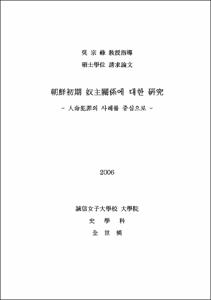
朝鮮初期 奴主關係에 대한 硏究
- Abstract
- 본 논문은 조선초기의 노비와 노비소유주 사이에서 발생한 인명범죄의 사례에 대한 기록을 중심으로 노비와 주인의 관계를 고찰하였다. 이를 통해 지배층의 노비소유에 어떤 문제점이 내재되어 있었는지를 살펴보고 노비소유자에 대한 노비의 저항이 어떤 형태로 나타났는지를 검토하였다. 또한 奴主關係의 갈등 표출의 방식과 변화해가는 奴主關係의 추이를 규명하였다.
2장에서는 태조대로부터 성종대에 이르는 100여년의 기간 동안 기록된 인명범죄를 검토하여 가해자와 피해자의 관계를 분석하였다. 그 결과 가족구성원 사이에서 발생한 범죄가 가장 큰 비중을 차지하였고 奴主關係에서 발생한 범죄가 그 다음을 차지하였다. 이를 통해 奴主關係 아래에서 적지 않은 인명범죄가 발생하고 있었던 것을 알 수 있었다. 그리고 이 시기의 노비와 주인의 관계가 상당한 갈등과 마찰이 내재되어 있는 사회적 관계였음을 확인할 수 있었다.
3장에서는 奴主關係에서 발생한 인명범죄의 원인을 노비에 대한 주인의 범죄와 주인에 대한 노비의 범죄로 나누어 분석하였다. 노비에 대한 주인의 인명범죄는 私刑이라는 명목으로 자행되고 있었으며 이는 濫殺과 酷刑의 형태로 나타났다. 주요 원인은 노비의 도망 즉 主家에 경제적 손실을 입히는 행위에 있었다. 주인에 대한 노비의 인명범죄는 주로 주인의 신체적․경제적 침탈로 인하여 발생하고 있었다.
4장에서는 奴主關係 인명범죄의 원인과 양상이 15세기 후반 이후 점차 큰 폭으로 변화되어 가는 것에 주목하여 奴主關係의 추이를 살펴보았다. 15세기 후반은 지배층의 토지집적과 정부의 가혹한 수취체제에 따른 농민의 토지 이탈이 가속화되는 시기였다. 몰락한 양인들의 사노비로의 투탁과 雇工化, 良賤交婚으로 인한 奴妻 및 婢夫의 양산으로 인하여 私賤人口가 급속하게 증가하였다. 이에 따라 노비의 소유를 정당화하고 수탈을 합리화 하던 奴主之分의 명분은 동요되기 시작하였고 농업생산력의 증대에 따라 노비의 신분상 처우 개선에 대한 요구도 점차 증대되어 갔다. 사회경제적 변화와 맞물려 진행된 노비처우에 대한 인식 및 노비소유자에 대한 인식의 변화는 노비들로 하여금 저항의 강도를 한층 거세게 드러내게 하였고 이 시기의 殺主의 양상이 점차 집단적으로 변화하는 것을 가능하게 하였다.
조선초기의 奴主關係는 노비의 효율적인 소유를 실현하기 위한 본주의 통제 강화와 이로부터 벗어나기를 꾀하는 노비의 저항 심화로 말미암아 갈등을 겪고 있었다. 이와같은 奴主關係는 15세기 후반의 사회경제적인 변화가 진행되면서 점차 변화를 겪게 되었다. 양인인구가 천인으로 하향 분화하는 현상이 점차 증가하고 이에 따라 엄격하게 규정되었던 奴主之分은 동요하기 시작하였던 것이다. 아울러 생산력의 발달로 인해 노비의 신분상 처우 개선에 대한 요구도 증대되어 감에 따라 15세기 후반 이후 奴主關係는 점차 본주의 노비 통제의 한계를 드러내게 되었고 노비의 저항은 보다 적극적인 방향으로 나아가게 되었다.|This paper examined the slave-master relationship (奴主關係), centering on fatal crimes committed between slaves and their masters in the Early Chosun Dynasty. Through this, it looked into how the resistance of slaves was unfolded and what problems were inherent in the slavery system. In addition, it also revealed the way conflicts were expressed in slave-master relationship and the trend in the changing slave-master relationship.
chapter 2 the relationship between victims and assaulters was analyzed by reviewing documents recorded for more than 100 years from the reign of King Taejo(太祖) to the reign of King Sungjong(成宗). As a result, crimes among family members accounted for the most, 45% and crimes in slave-master relationship came in the second, accounting for 24%. Through this, it was concluded that there were not a few fatal crimes in slave-master relationship. Moreover, it was confirmed that there were a significant amount of conflicts and frictions between slaves and masters.
chapter 3 the causes of fatal crimes in slave-master relationship were classified in two categories: crimes committed by masters to slaves and crimes committed by slaves to masters. Crimes by masters were committed for the excuse of vigilantes and took on two forms such as indiscriminate murders and severe punishments. The charges were mostly attempted escapes, in other words economic loss inflicted to masters. Crimes by slaves to masters were caused mainly by either physical or economic deprivation by masters.
chapter 4 was dedicated to investigating the trends of slave-master relationship, focusing onthe dramatic change in the causes and aspects of fatal crimes in slave-master relationship in the late 15th century. The 15th century was when peasants’ deprivation of land was accelerated due to the government’s harsh exploitation and land accumulation by the ruling class. The population of Sacheon(私賤) had been rapidly growing due to Gogonghwa(雇工化), the increase in the number of Nocheo(奴妻), Bibu(婢夫) from Yangin(良人)-Cheonin(賤人) inter-marriage (良賤交婚), and the fact that ruined commoners were reduced into private slaves. Accordingly, the justification for the slavery system which had rationalized masters’exploitation of slaves started shaking Furthermore, slaves asked for the improvements of their conditions as the productivity of agriculture increased. Along with the socio-economic changes, there were shift in the perception of the treatment of slaves and masters, which allowed murders of masters by slaves to develop into collective crimes and made their resistance more violent.
The conflicts and frictions of slave-master relationship in the Early Chosun Dynasty grew from the opposing attributes between masters’ control to realize efficient mastership of slaves and slaves’ resistance in order to escape from masters’ reinforced control of social and economic status. Such slave-master relationship gradually revealed its limitations in the late 15th century and slaves’ resistance developed in a more aggressive way.
- Issued Date
- 2006
- Awarded Date
- 2006-08
- Type
- Dissertation
- Affiliation
- 성신여자대학교
- Department
- 일반대학원 사학과
- Advisor
- 오종록
- Table Of Contents
- 論文槪要
Ⅰ. 序論 = 1
Ⅱ. 人命犯罪에서의 奴主關係의 비중 = 6
Ⅲ. 奴主關係 人命犯罪의 형태별 원인 분석 = 14
1. 주인의 노비에 대한 범죄 = 14
2. 노비의 주인에 대한 범죄 = 25
Ⅳ. 人命犯罪를 통해 본 奴主關係의 변화 = 38
Ⅴ. 結論 = 55
參考文獻 = 58
ABSTRACT = 61
- Degree
- Master
- Publisher
- 성신여자대학교
- 파일 목록
-
-
Download
 朝鮮初期 奴主關係에 대한 硏究.pdf
기타 데이터 / 940.68 kB / Adobe PDF
朝鮮初期 奴主關係에 대한 硏究.pdf
기타 데이터 / 940.68 kB / Adobe PDF
-
Items in Repository are protected by copyright, with all rights reserved, unless otherwise indicated.