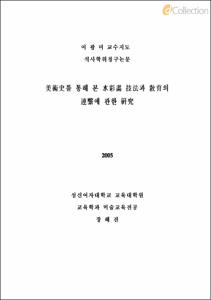
미술사를 통해 본 수채화 기법과 교육의 연계에 관한 연구
- Alternative Title
- A study of the link between watercolor painting techniqes and art education from the perspective of an artist
- Abstract
- 무릇 예술 교육은 인간의 정서 함양과, 창조적이고 주체적인 인간상을 육성하는데 그 목적이 있다. 미술교과목 역시 다양한 표현과 작품 감상 등을 통해 미적 정서 함양과 창의성 개발을 그 목표로 한다.
이처럼 미술교과가 원만한 인간상의 형성과 전인적 인격을 갖추는데 있어 중요한 과목임에도 불구하고, 현재 우리 미술교육의 실정은 과도한 입시 경쟁 등으로 인해 중요시해야 할 교과과정이 소홀히 다루어지거나, 원리의 이해에 기초하지 않는 획일적이고 소극적인 교육에 그치고 있다.
본 연구는 이러한 교육실정의 근본적인 문제점이 한정적인 표현기법에 치중하는 미술 실기수업의 경향 때문이라 보고, 이의 효율적인 지도를 위해 미술교육이 올바르게 나아가야 할 하나의 방향을 제시하고자 한다. 이 과정에서 광범위한 미술 분야 가운데, 다루고자 하는 범위는 수채화로 제한한다. 수채화를 연구의 기본범주로 정한 이유는, 수채화가 타 미술 분야에 비해 재료의 이용이 비교적 손쉽고, 회화의 한 장르로써 중등 미술교육과정에서 수업에 광범위하게 활용되고는 있으나, 기법의 한 가지 특성만을 지나치게 강조하여 학생들의 수업 참여도가 낮고, 흥미도가 떨어져 충분한 학습효과를 얻지 못하고 있기 때문이다.
먼저 본 연구에서는 이러한 현재 교육과정의 실정을 인식하기 위해 시대적 특성에 따른 미술작품의 경향 및 재료의 변화, 그리고 이에 따른 표현기법의 발달 등 미술사적 근거를 바탕으로, 수채화의 표현기법을 총괄적으로 살펴보고자 한다.
수채화의 역사적 고찰을 통하여 앞서 말한 바와 같이 수채화의 발달과정과 흐름을 이해하여 수채화에 대한 기초적이고 전반적인 지식을 습득하고, 시대별로 나타난 작품의 다양한 기법을 이해하여 폭넓은 표현방법의 제고를 위한 간접경험을 가능하게 하고자 한다. 또한 수채화 작가를 선정하여 다양한 작품을 분석함으로써 간접적 경험을 통한 효과를 얻도록 유도하여 감상교육으로써의 긍정적인 가능성도 보여주고자 한다. 이를 통해 수업에 대한 학생들의 흥미를 높임과 동시에 적극적이고 창의적인 조형 활동을 가능하게 하는 방향을 제시하였다.
과거부터 현재까지의 수채화에 대한 고찰 후, 현재 우리 수채화 교육 현실을 미술 교과서의 분석을 통해 알아본다.
결론적으로, 교과서의 분석을 통해 현재 교육현장의 문제점을 제시하고 외국 수채화 교육과 비교 분석함으로써 당면한 교육과제를 파악한다. 이와 같은 과정을 거친 후, 다양한 수채화 표현기법과 역사적 흐름에 대해 살펴봄으로써, 수채화 표현기법 교수-학습을 올바른 방향으로 이끄는 하나의 방법론을 제시하는 것을 본 논문의 최종 목적으로 한다.
그리고 이러한 미술사적 접근을 통한 표현기법의 고찰이 우리 수채화 교육의 발전에 조금이나마 도움이 되길 바란다.|The aim of art education is to cultivate human emotions and to create creative and independent individuals. Therefore, art education also serves the function of cultivating aesthetic emotions and creativity by exposing individuals to aesthetic works of art.
Although art education plays an important role of shaping emotions and personality to form a harmonious and peaceful human being, currently in our society, this all important art education is being sidelined due students' need to prepare for the university entrance exam and we are left with a curriculum that emphasizes uniformity with no teaching in the art fundamentals.
In this research, we see the source of this problem arising from the inadequacy of expression in the practical art education and we attempt to devise solutions and new methods of instruction to overcome these difficulties. From the myriad of art-forms and techniques available to us, we have chosen to focus this study in the field of watercolor painting. We have chosen to base this research on the findings in the field of watercolor painting because compared to other fields, the material(watercolor) is easy to handle but more importantly, although it is a permanent fixture in the secondary school curriculum, because of too much emphasis on technique alone, there is very little room for student participation, resulting in the ineffective instruction of the subject. In order to understand the state of art education today, we will look at how the art-form and materials used for the art has changed over the times and subsequently the effects it has had on the development of various modes of expression especially in the field of watercolor painting.
We will study the historical development of watercolor painting, and as previously mentioned, by understanding the developmental trend of watercolor painting we hope to gain an elementary but comprehensive knowledge of the field of watercolor painting, so that we will be able to understand the different techniques utilized in the various significant works of each era in an effort to improve and enhance one’s ability to express oneself through this medium. Additionally, by selecting a watercolor painter and studying, analyzing and experiencing his/her various works, we hope to highlight the importance and potential of observational education. Through this method, we hope to point to a more effective mode of instruction where the students’ interested are piqued and, at the same time, there are more active participation and room for them to be creative.
After concluding our examination of the history of watercolor painting, we will analyze the textbooks used in our schools today to gain an understanding of the current state of watercolor painting education.
In conclusion, through the analysis of the major textbooks used in our schools, I hope to reveal the problems and weaknesses of today's educational system and through the comparison of watercolor painting education in other countries come up with solutions to these problems. After completing this process, we will look at the various methods of expression as well as the historical trend of watercolor painting, and we will conclude this study by devising a new form of teaching method which will help place Korea's watercolor painting education in the right direction.
Moreover, by studying the techniques of expression through historical analysis, I hope to contribute in the development of watercolor painting education.
- Issued Date
- 2005
- Awarded Date
- 2005-08
- Type
- Dissertation
- Alternative Author(s)
- Chang, Hye-Jin
- Affiliation
- 성신여자대학교 교육대학원
- Department
- 교육대학원 미술교육
- Advisor
- 이광미
- Table Of Contents
- 목차
논문개요
Ⅰ. 서론 = 1
1. 연구의 목적 = 1
2. 연구의 내용 및 방법 = 2
Ⅱ. 수채화의 역사적 배경 = 4
1. 수채화의 기원 = 4
2. 수채화의 발달 = 5
3. 현대 수채화의 동향 = 15
Ⅲ. 미술사를 통한 수채화 교육의 실제 = 26
1. 수채화 교육의 개념 = 26
2. 수채화 교수-학습과정의 중요성 = 27
3. 수채화 교육의 실제 = 27
4. 효율적인 수채화 교육 방안 = 37
Ⅳ. 결론 = 39
참고도판
참고문헌
ABSTRACT
- Degree
- Master
- Publisher
- 성신여자대학교
- 파일 목록
-
-
Download
 미술사를 통해 본 수채화 기법과 교육의 연계에 관한 연구.pdf
기타 데이터 / 4.84 MB / Adobe PDF
미술사를 통해 본 수채화 기법과 교육의 연계에 관한 연구.pdf
기타 데이터 / 4.84 MB / Adobe PDF
-
Items in Repository are protected by copyright, with all rights reserved, unless otherwise indicated.