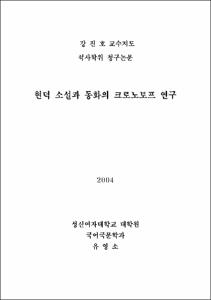
현덕 소설과 동화의 크로노토프 연구
- Alternative Title
- (A) Study on the Chronotope of Novel and Fairy Tale by Hyunduk
- Abstract
- 본 논문은 1930년대 후반 신진 작가로 주목받았던 현덕의 작품들을 살펴 그 문학적 의미를 구명하고, 그에 나타난 현덕의 현실 인식을 밝히는 것을 목적으로 하였다.
주로 1930년대 후반에 씌어진 현덕의 텍스트에 주목하는 것은 우리 근대문학의 새로운 미학을 창조한 그의 글쓰기가 소설과 동화를 넘나들며 부정적인 현실 속의 문학적 모색을 시도하고 있기 때문이다. 그러나 현덕의 텍스트 연구는 아직까지도 소설 위주로 편향되어 있거나, 소설과 아동문학이라는 이원화 된 경로로 진행되고 있다. 따라서 동화와 소년소설, 소설을 함께 창작하며 각기 겨냥하는 독자를 분명히 구분했던 현덕의 작?갠湧? 아울러 관찰하고 그 소통을 살펴 1930년대 후반 문학의 흐름 속에서 현덕을 제대로 위치짓는 연구 성과는 여전히 미흡한 실정이다.
그러한 문제의식을 바탕으로 본 논문은 현덕이 작품 속에서 창조한 어린이 '노마'가 주된 인물로 등장하는 소설과 동화를 '노마 이야기'라는 텍스트의 범주로 묶어 살피되, 작품에 드러난 시간과 공간성의 문제라는 '크로노토프(chronotope)' 분석을 통해 두 장르간의 문학적 의미와 대화를 통한 현실 대응을 모색하고 있는 현덕의 문학적 구상을 연구하였다.
소설과 동화에 나타난 시간과 공간성에 대한 연구를 통해 그 각각의 문학적 의미를 구명하고 두 장르 간의 대화가 이루어내는 현실 인식을 밝히려는 본 연구는 결국 바흐찐의 가장 핵심적 개념인 크로노토프를 통하여 자기중심에 반(反)하는 대화주의를 향하고 있다. 이러한 대화주의는 무엇보다 동등한 자격으로서의 주체들이 공존할 것을 강조한다는 점에서 비대칭적이고 유일한 개인들이 이루는 '수평적 세계'와 과정의 존재이자 분열된 '개별적 주체'가 서로에게 응답하고 작용할 것을 권한다.
따라서 본 논문에서는 장르간의 대화를 통한 현실 대응을 모색하고 있는 '노마 이야기' 텍스트를 바흐찐의 주체/타자의 의미로 읽어낼 여지가 있음을 전제하고, 현덕의 소설 「경칩」과 「남생이」, 「두꺼비가 먹은 돈」 그리고 현덕의 '노마 연작동화'들을 대상으로 구체적인 분석을 시도하였다.
Ⅱ장에서는 현덕의 소설 「경칩」과 「남생이」를 길과 문턱의 크로노토프로 검토하여 분석하고 그를 통해 현덕의 현실 인식을 살펴보았다. 서로를 구성하는 타자들의 만남과 경계에서 분열하는 주체의 혼란이 당대의 부정성을 심화하는 가운데에서도, 갈등하며 관계 맺으려는 가능성의 크로노토프를 구조화한 현덕의 인식은 노마를 통해 더욱 두드러진다. 이것은 집단적인 사유에서 개인적인 사유로의 이행이 두드러졌던 1930년대 후반 글쓰기에 몰입했던 현덕이 발견한 노마라는 '주체'의 보다 복잡해진 현실의 문제들을 소설적 재현을 통해 소설과 관련한 모든 타자들과의 대화를 시도하고 있음을 보여준다.
Ⅲ장에서는 현덕의 동화들을 놀이의 크로노토프로 살피되 실컷 뛰어노는 아이들이 제 마음대로 부리는 시공간의 환상과 조작을 통해 현실의 방향성을 재고하고 있는 현덕의 인식을 살펴보았다. 즉, 노마 연작 동화에서 놀이의 크로노토프는 축제를 즐기듯 마음껏 놀려는 아이들이 스스로 부리?? 조작하는 환상이며, 그에 근거하여 아이들이 모색하는 새로운 질서가 현덕의 가치를 반영하고 현실의 방향성을 재고하고 있다는 점에서 의미를 찾을 수 있는 것이다. 텍스트 간의 상호작용적인 크로노토프를 분석함으로써 서로를 구성하는 타자적 텍스트들을 다시 체험하는 과정을 경험하고, 이를 통해 새로이 구조되는 크로노토프를 발견하는 '노마 이야기'에서 상호텍스트성의 문제 역시 Ⅲ장에서 살펴보았다. 소설 속의 어린이와 동화 속의 어린이가 지니는 내적 논리들의 상호작용을 통해 파열된 현실의 맥락들을 바라보고 전망하려는 현덕의 의도는 아이러니와 의미의 풍요가 창조된 생성의 크로노토프를 이끌며 당대의 혼란과 그 극복의 방향성을 다각적으로 모색하고 있는 것이다.
Ⅳ장에서는 소설과 동화의 텍스트가 서로 대화하며 새로운 의미를 생성하는 상호작용으로 길항하며, 이를 통해 시공간의 구체적인 역사 속에서 항시 응답을 요구하는 문학의 창조적인 반응에 부단히 노력한 현덕의 문학적 정체성을 새로이 살펴보았다.
이러한 현덕의 노력은 그 대화가 현재적으로도 계속된다는 또 하나의 사실에서 큰 힘을 얻으며, 특히 우리 아동문학의 형성과정에서 제기되는 근대의 문제, 즉 '어른이라는 분열된 주체의 결핍을 아동이라는 대상에 투영하면서 끊임없이 아동의 기의들을 변화시켜 가는 과정에서 그러한 결핍들을 채워나갔던 이데올로기적인 사고의 반성적 문제들을 극복할 수 있는 탈근대적 시도를 보인다는 점에서 주의를 요한다. 어린이와 어른이 '나'라는 실체 안에서 서로 간섭하는 존재이자 하나에서 다른 하나로 흘러가고 회귀하는 공명의 관계를 이루는 것이라면, 노마의 가능성은 이 관계를 밀어가는 한 파동이 될 수 있다는 점에서 현덕의 문학을 근대와 현대의 즐거운 대화로 이끄는 것이다.|This study aimed at examining the works by Hyunduk which was attracted attention as a rising novelist at the latter half of 1930s, examining the literary meaning closely and clarifying the actuality recognition of Hyunduk which appeared in it.
The reason why we take note of the text by Hyunduk which was written at the latter half of 1930s is because his writing which created the new aesthetics of our modern literature is trying the literary groping in negative actuality, frequenting novel and fairy tale. But, the study on the text by Hyunduk is leaning toward novel, or it is progressing in dualized course to be novel and juvenile literature.
Thus, It is real situation that findings to position Hyunduk right in the stream of literature at the latter half of 1930s is incomplete by observing the works by Hyunduk who created fairy tale, boy novel and novel together and distinguished the readers that each aimed clearly and examining the understanding.
On the basis of such critical mind, this researcher examined novel and fairy tale that a child whom Hyunduk created in work, Noma appeared as a main character by binding them with the category of text, 'Noma Story' and studied the literary idea of Hyunduk which is groping actuality confrontation through literary meaning and dialogue between 2 genres through the analysis of Chronotope to be the issue of time and sptiality which were revealed in work.
This study which tries to examine the literary meaning of each one through the study on time and spatiality which appeared in novel and fairy tale and clarify actuality recognition that dialogue between 2 genres makes is leaning toward dialogue principle to be opposite to self-centeredness to be based on theory and monologue.
This dialogue principle recommends horizontal world that asymmetrical and only individuals make and separated individual subject to be the existence of course to answer and act for each other, in that this dialogue principle emphasizes that subjects as equal qualification coexist.
Thus, in this study, this researcher premised that there is room for reading the text of 'Noma story' which is groping for actuality confrontation through the dialogue between genres in the meaning of the subject of Bachjin/others and tried concrete analysis on [Kyoungchip], [Namseingi], and [money that toad ate] which are the novels by Hyunduk and the fairy tale by Hyunduk, 'Noma'.
In the chapter Ⅱ, this researcher examined and analyzed [Kyoungchip] and [Namsengi] which are the novels by Hyunduk with the Chronotope of way and threshold and examined the actuality recognition of Hyunduk through it. The recognition of Hyunduk who structuralized the Chronotope of possibility to try to have relation, causing complications even while the confusion of subject to be divided in the meeting and boundary of others to constitute each other deepens the then negation nature is striking all the more through Noma.
This shows that 'subject' Noma that Hyunduk who was absorbed in writing at the latter half of 1930s when the shift from collective speculation to individual speculation was striking discovered is trying the dialogue with all the others related to novel through novel representation about the problems of actuality which became complicated all the more.
In the chapter Ⅲ, this researcher examined the fairy tales by Hyunduk with the Chronotope of play and examined the recognition of Hyunduk who is reconsidering the directivity of actuality through the fantasy and operation of time and space that children who jump and play to their satisfaction use at their disposal.
That is, the Chronotope of play in the fairy tale of Noma is the fantasy that children who try to play at their disposal, as if they rejoice festive control and operate for themselves, and meaning may be found in that new order that children grope for is reflecting the value of Hyunduk and is reconsidering the directivity of actuality on the basis of it. In the chapter Ⅲ, this researcher examined the issue of mutual text nature in 'Noma story' to experience the course to experience the texts of others to constitute each other again by analyzing Chronotope to be interactive between texts and to discover Chronotope to be structuralized newly through it. The intention of Hyunduk to try to look at the veins of burst actuality and forecast them through the interaction of inner logics that children in novel and children in fairy tale have is groping for then confusion and the directivity of the overcoming multilaterally, leading the irony and the Chronotope of generation that the richness of meaning was created.
In the chapter Ⅳ, this researcher examined the literary original form nature of Hyunduk who made efforts endlessly for the creative reaction of literature to contend with interaction that the texts of novel and fairy tale converse and mutually and generate new meaning and to require answer at all times in the concrete history of time and space through it newly.
This efforts of Hyunduk obtains great power from another fact that the dialogue continues presently also and draws attention in that it shows the trial to escape from recent times which can overcome the problems of recent time which are raised in the course of formation of our juvenile literature, that is, the introspective problems of ideological thinking which filled such deficiencies in the course of changing the novel meanings of children endlessly, projecting the deficiency of divided subject to be adult to the subject of children, especially.
If children and adults are the existences to intervene mutually in the entity, 'me' and what forms the relation of sympathy to flow and recur from one to another, that the possibility of Noma may be one wave motion to push this relation leads the literature of Hyunduk to the joyful dialogue of recent times and modern times.
- Issued Date
- 2004
- Type
- Dissertation
- Affiliation
- 성신여자대학교 대학원
- Department
- 국어국문학과
- Description
- 국문요약: p. i-ⅲ
- Table Of Contents
- 논문개요 = ⅰ
목차 = ⅳ
Ⅰ. 서론 = 1
1. 연구 목적 및 대상 = 1
2. 연구사 검토 = 3
3. 연구 방법 = 8
Ⅱ. 현덕 소설의 크로노토프 = 15
1. 서로를 구성하는 타자 = 16
2. 삶의 경계에서 균열하는 주체 = 26
Ⅲ. 현덕 동화의 크로노토프 = 38
1. 주체와 타자의 원체험 - 놀이의 조작적 시공간 = 39
2. 추체험에서의 주체와 타자 - 대화의 상호작용적 시공간 = 50
Ⅳ. 현덕 문학의 의의 = 62
Ⅴ. 결론 = 65
참고문헌 = 70
ABSTRACT = 75
※첨부 표1) = 80
- Degree
- Master
- Publisher
- 성신여자대학교 대학원
- 파일 목록
-
-
Download
 현덕 소설과 동화의 크로노토프 연구.pdf
기타 데이터 / 2.86 MB / Adobe PDF
현덕 소설과 동화의 크로노토프 연구.pdf
기타 데이터 / 2.86 MB / Adobe PDF
-
Items in Repository are protected by copyright, with all rights reserved, unless otherwise indicated.