초등영어 교실에서 교사와 학생의 상호작용 분석: 원어민 교사와 한국인 교사의 사례 비교
- Alternative Title
- An Interaction Analysis between teachers and students in Elementary Classroom: The comparison of NS teacher and Korean teacher
- Abstract
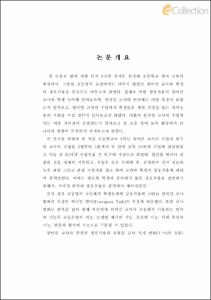
- 본 논문은 벌써 시행 된지 8년에 접어든 한국의 초등학교 영어 교육의 현장에서, 그동안 초등영어 교실에서는 다루지 않았던 원어민 교사와 학생의 상호작용을 중심으로 다루고자 하였다. 실제로 어떤 상호작용이 원어민 교사와 학생 사이에 일어났으며, 원어민 교사의 언어에는 어떤 특징이 보였는지 알아보고, 원어민 교사의 수업에서 학생들은 과연 진정성 있는 의사소통의 기회를 가질 것인지 알아보고자 하였다. 더불어 한국인 교사의 수업에서는 어떤 차이점이 관찰되는지 알아보고 현 초등 영어 교육 환경에서 더 나아갈 방향이 무엇인지 제시하고자 하였다.
본 연구를 위하여 한 사립 초등학교의 5학년 원어민 교사의 수업과 한국인 교사의 수업을 3월부터 5월까지 두 달여 동안 16번의 수업에 참관하였고 이들 중 10개의 수업만을 본 연구의 대상으로 하였다. 참관할 때마다 관찰한 것을 자세히 기록하고, 수업은 모두 녹취한 후, 전사하여 전사 자료와 녹음 테잎 그리고 관찰 기록지를 참고 하여 교사와 학생의 상호작용에 대하여 분석하였다. 이때는 되도록 학생의 준비되지 않은 상호작용을 관찰하기 위해서, 기계적 반복의 상호작용은 분석에서 제외시켰다.
분석 결과 초등영어 교실에서 학생들과의 상호작용에 나타난 원어민 교사 발화의 특징은 외국인 언어(Foreigner Talk)의 특징과 비슷했다. 또한 교사 발화는 반복을 많이 하게 마련인데 원어민 교사가 교실에서 사용하는 반복의 기능은 교실운영의 기능, 모델링 제시의 기능, 강조의 기능, 이해 촉진의 기능, 반응과 평가의 기능으로 구분할 수 있었다.
원어민 교사와 학생의 상호작용의 유형을 교사 개시 발화(T→S의 흐름)와 학생 개시 발화(S→T의 흐름)로 나누어 분석하였다. 실제 외국인과의 의사소통에서 매우 중요한 의미 협상 활동이 두 유형에서 모두 관찰되었다. 그러나 그 빈도수는 매우 낮았다. 반면, 오류 수정 활동 역시 두 유형에서 모두 관찰되었지만 특히 교사 개시 발화 상호작용 유형에서 매우 빈번하게 발생하였고, 성공적 상호작용을 이끄는 교사의 몇 가지 기술을 보여주었다. 전체적으로는 학생 개시 발화 유형은 교사 개시 발화 유형에 비하여 매우 적게 나타났지만, 또한 자연스러운 대화와 비슷한 회화는 학생 개시 발화 유형에서 관찰되었다.
한국인 교사 언어의 특징은 모국어를 사용하는데, 이 때 모국어로 말한 것을 바로 영어로 번역하여 말하고, 영어로 말한 것을 이어서 간략하게나마 우리말로 다시 번역하여 말하는 것이다. 또한 수업을 진행할 때 농담이나 유행어 등을 사용하여 편한 분위기를 이끌어 가는 특징도 보였다. 상호작용은 그 빈도수가 원어민 교사의 경우에 비하여 많지는 않았지만 수업 중, 학생들의 학습상태를 점검하기 위한 목적으로 의도된 상호작용이나 오류수정의 형태로 나타난다. 반면, 의미협상적 상호작용과 학생개시 발화로 인한 자연스런 대화는 목표어로 이루어 지지 않았다.
따라서 모국어 사용의 장점 때문에 현재 바람직하게 여겨지는 한국인 교사의 영어와 모국어 혼용 수업과 더불어, 더욱 실제적인 상호작용을 다양하게 경험할 수 있는 원어민 교사의 수준별 교육이 전반적으로 이루어져야 할 것이다. 그러나 이미 시행되고 있는 원어민 교사의 수업 현황에서도 지나친 학생 수와 학생들의 자발적 상호작용을 이끌 수 있는 교육적 도구들이 부족한 것은 여전히 이상적 외국어 교실을 형성하는데 큰 제약이 따른다고 본다.|This study investigated interaction between English teachers and students in a Korean elementary classroom. Teaching English to elementary school students was first introduced eight years ago in Korea. The purpose of this study was to figure out how the interaction took place between them, what kind of features the English teachers had, and if students had real communication opportunity with the teachers or not. In addition, this study tried to examine what differences are between a native English teacher and a Korean English teacher.
The participants were one native English teacher and one Korean English teacher of a private elementary school and one 5th grade high level class and one 5th grade normal class. I observed classes 16 times with field notes. All classes were audio-taped and transcribed except six classes with screen English. An interaction was analyzed with all these data. The automatically occurred interaction was excluded in order to observe the unprepared interaction.
The results showed that the native English teacher utterance had similar features to Foreigner Talk. The teacher tended to utter repetitively and this teacher repetition had several functions: that is, classroom managing, modeling, emphasizing, promoting of conversation and reacting & evaluating. The interaction patterns were classified as T→S flow(teacher initiate interaction) and S→T flow(student initiate interaction). The meaning negotiation showed in both patterns of interaction although it was a rare occurrence. Error correction was also observed in both and it was very widely used in T→S interaction flow. Also it showed several teacher techniques led to the successful interaction. Synthetically, S→T pattern is not much frequent compared with T→S pattern. However S→T pattern also showed very natural conversation because students' utterance was often spontaneous, unplanned and casual.
The features of Korean English teacher utterances are using Korean in a way of translating Korean that she said right before into English and of translating English she said right before into Korean. And the Korean teacher often told a joke and words in fashion that gave the students less burden. The interaction with the Korean English teacher was more unusual compared with the native English teacher's interaction. There was no meaning negotiation and no casual conversation in English. But error correction showed by purpose of verifying and checking of student's learning.
These results led to the conclusion that the native English teacher teaching classroom should be generally contrived with the Korean teacher's using English together with Korean class because of the benefit from the mother tongue. Also students need to study together with other students who have similar competence with them. However, many students in a class remains problematic. Therefore shortage of classrooms and of other instructional tools are still restricted in formation of communicative language classroom.
- Issued Date
- 2005
- Awarded Date
- 2005-08
- Type
- Dissertation
- Alternative Author(s)
- Jung, Joo Yong
- Affiliation
- 성신여자대학교 대학원
- Department
- 일반대학원 영어영문학과
- Advisor
- 고정민
- Table Of Contents
- 목차
논문개요
Ⅰ. 서론 = 1
Ⅱ. 이론적 배경 = 4
1. 제2 언어 습득의 입력 및 상호작용에 관한 연구 = 4
2. 교실 상호작용에 관한 연구 = 11
3. 교사언어(Teacher Talk)에 관한 연구와 이론 = 18
Ⅲ. 연구 방법 = 24
1. 연구 대상자 및 기간 = 24
2. 자료 수집 및 분석 = 27
Ⅳ. 연구 결과 = 29
1. 원어민 교사 언어의 특징 = 30
(1) 반복의 기능 = 31
2. 학생 발화 시작(Student Initiation)으로 인한 상호작용 = 34
(1) 의미협상 = 35
(2) 오류 수정 = 38
(3) 자연스러운 대화: 의미 협상과 오류 수정을 거치지 않는 상호작용 = 41
3. 교사 발화 시작(Teacher Initiation)으로 인한 상호작용 = 48
(1)의미 협상 = 49
(2) 오류 수정 = 54
① 직접적 오류 수정 = 54
② 간접적 오류 수정 = 58
ⅰ) 자기 자작 방법 (Self-awareness) = 58
ⅱ) 모델 제시 방법 (Modeling) = 59
ⅲ) 또박 또박 말하기 (Articulation) = 62
4. 한국인 교사의 언어 및 상호작용 = 63
Ⅴ. 결론 및 제언 = 71
참고문헌 = 75
ABSTRACT = 80
- Degree
- Master
- Publisher
- 성신여자대학교
- 파일 목록
-
-
Download
 초등영어 교실에서 교사와 학생의 상호작용 분석: 원어민 교사와 한국인 교사의 사례 비교.pdf
기타 데이터 / 1.26 MB / Adobe PDF
초등영어 교실에서 교사와 학생의 상호작용 분석: 원어민 교사와 한국인 교사의 사례 비교.pdf
기타 데이터 / 1.26 MB / Adobe PDF
-
Items in Repository are protected by copyright, with all rights reserved, unless otherwise indicated.