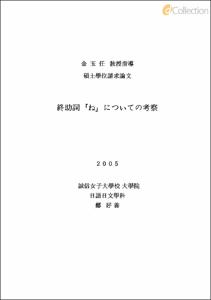
終助詞「ね」についての考察
- Alternative Title
- A Study of the Sentence-final Particle 'ne'
- Abstract
- 日本語의 特徵의 하나로서, 聽者에 대한 話者의 配慮를 反映한 表現樣式이 다른 言語에 비해 현저히 나타나고 있다는 점을 들 수 있다. 言語에 의한 커뮤니케이션에는 一般的으로 對人的 機能을 看過할 수 없다. 對人的 機能을 表現樣式에 어느 정도 反映하는가는 言語에 따라 다른데, 日本語는 그 反映의 程度가 높은 言語라고 생각된다. 日本語에 있어서, 이러한 機能을 높이는 役割을 하는 表現 樣式 중의 하나로서 終助詞 「ね」를 들 수 있다.
從來에 終助詞라고 하는 것은, 文末에 있어서 文章이 나타내는 命題에 대한 話者의 判斷 · 同意 · 疑問 · 詠嘆, 또는 話者가 聽者에 대해 행하는 傳達 · 確認 · 禁止 등의 모달리티 情報를 擔當하는 것으로 다루어져 왔다. 특히 「ね」에 있어서는 聽者의 知識 · 情報에 대한 考慮, 그 知識 · 情報가 話者의 領域 안에 속하는지 그렇지 않은지의 情報 歸屬의 槪念, 더 나아가 情報의 共有를 促進한다고 하는 談話調節의 機能 등, 聽者에 대한 話者의 文 傳達態度를 나타내는 傳達態度의 모달리티의 觀點에서 다루어져 왔다. 하지만 「一杯ぐらい平氣でしょ?」「いや、仕事が仕事ですからね」의 「ね」처럼 위에서 言及한 觀點만으로는 說明되지 않는 경우도 있다.
이에, 本論文에서는 對話文에서 빈번히 사용되는 終助詞 「ね」를 對象으로, 「Politeness」의 槪念을 導入하여 다양한 用法을 갖는 終助詞 「ね」를 統一的으로 說明하고자 하였다. 그 內容을 정리하면 다음과 같이 要約할 수 있다.
먼저, 「ね」에는 단순히 聽者의 情報를 配慮하는 機能뿐만이 아니라, 聽者의 氣分을 配慮한다고 하는, 이른바 「配慮 表現」의 役割을 하고 있다는 것을 알 수 있다. 결국, 「ね」의 모든 用法에는 聽者에 대한 話者의 「配慮」가 共通的으로 들어 있다고 할 수 있으며, 이로써, 「ね」의 모든 用法이 統一的으로 說明될 수 있음을 提示하였다. 詰問의 語調를 부드럽게 하거나, 行爲를 要求 하는 등 依賴를 함으로써 상대가 느끼는 負擔에 대한 配慮가 「ね」로서 表現되고 있다고 생각된다. 또한 聽者에게 강한 拒絶이나 反對意見을 提示하는 경우, 상대방이 느낄 수 있는 反感이나 摩擦을 緩和시키려는 配慮를 「ね」로 表現하고 있다고 생각된다.
本論文에서 행한 分類와 分析은, 日本語 敎育의 現場에서도 도움이 되리라고 생각된다.|As a characteristic of Japanese, forms of expression considering for the other person in a dialogue are outstanding. Personal function of the language as means of communication can not be overlooked. Whereas personal function of a language differs in degree with languages, Japanese can be thought to have distinctively personal functions. The sentence-final particle ( 終助詞) [Ne(ね)] can be given as the typical form which strengthen the personal function in Japanese.
Final sentence particles are considered to deliver speaker's judgment, agreement, question, and exclamation, or modality information such as message, confirmation and prohibition. In particular, 「ね」has been studied from the perspective of messaging modality such as considering listener's knowledge and information, whether the knowledge or information is included in the speaker's boundary and controlling dialogues to facilitate information sharing. However there are expressions which cannot be explained by the modality perspective in such cases as 「ね」in 「一杯ぐらい平氣でしょ?」「いや、仕事が仕事ですからね」.
The subject of this study is the sentence-final particle [Ne(ね)] which have various uses. I tried to present a coherent argument through introduction of the concept of [Politeness]. In brief, the result of the study is as follows.
[Ne(ね)] has the function to express consideration not only for the information but for feelings of the other person. It plays a part for what is called [expression for consideration].
It can be found that consideration is represented when cross-questioning sounds softy speaker's use of [Ne(ね)] and that consideration for what the other person feels as a burden when he/she is asked for an action is expressed as [Ne(ね)].
In addition, [Ne(ね)] is used to relieve ill feelings or frictions in a sentence in which strong refusal or opposition is expressed.
The classification and analysis performed in this thesis will provide valuable aid for those who teach or be taught Japanese.
- Issued Date
- 2005
- Awarded Date
- 2005-08
- Type
- Dissertation
- Alternative Author(s)
- Jeong, Ho-seon
- Affiliation
- 誠信女子大學校 大學院
- Department
- 일반대학원 일어일문학과
- Advisor
- 金玉任
- Table Of Contents
- 目次
論文槪要
Ⅰ. 序論 = 1
1. 硏究の目的と範圍 = 2
2. 本論文の構成 = 4
Ⅱ. 先行硏究と問題の提示 = 6
1. 先行硏究 = 7
1.1. 大曾 (1986) = 7
1.2. 陳常好 (1987) = 9
1.3. 神尾 (1990) = 12
1.4. 益岡 (1991) = 14
1.5. 金水 (1991) = 16
1.6. 金水 (1993) = 19
1.7. 宮崎 (2002) = 21
2. 問題の提示 = 23
Ⅲ. 本論文の화조み = 24
1. ポライトネスと「配慮表現」 = 25
1.1. Leech (1983) = 25
1.2. Brown & Levinson(1987) = 26
1.3. 生田(1997) / 山岡 (2003) = 27
Ⅳ. 「ね」の機能 = 30
1. 同意 = 31
2. 同意要求 = 38
3. 確認要求 = 41
4. 行爲要求 = 49
5. 評價づけ = 54
6. 不同意 = 59
Ⅴ. 結論 = 65
參考文獻 = 68
ABSTRACT = 70
- Degree
- Master
- Publisher
- 성신여자대학교
- 파일 목록
-
-
Download
 終助詞「ね」についての考察.pdf
기타 데이터 / 915.54 kB / Adobe PDF
終助詞「ね」についての考察.pdf
기타 데이터 / 915.54 kB / Adobe PDF
-
Items in Repository are protected by copyright, with all rights reserved, unless otherwise indicated.