1930년대 모더니즘 시의 타자성 연구
- Alternative Title
- A Study on The Other on 1930's Modernism Poetry
- Abstract
- 본 논문의 목적은 1930년대 한국 모더니즘 시의 타자성을 일본 제국주의의 식민지적 타자화에 저항하는 상상적 타자성의 관점에서 연구함으로써, 모더니즘 시의 탈식민적 의의를 모색하려는 데 있다.
탈식민의 저항으로서 타자성을 살피는 것은 제국주의 담론에 대한 저항의 의의를 지닌다. 왜냐하면 탈식민적 관점은 문화적・ 정치적 정체성이 타자화의 과정을 통해 구성되는 것을 비판하기 때문이다.
근대 이후 인간은 스스로를 주체로 호명하기 위해 신, 자연을 대상물로 삼았는데, 이러한 타자의 범주에는 동양․ 비서구적 타자․ 외국인․ 동성애자․ 여성은 물론 죽음․ 무의식․ 광기를 비롯하여 서구 동일성 사유에서 소외된 사람들과 인식이 포함된다. 그런데 식민담론에서는 지배의 정당성을 주체와 타자라고 하는 이분법을 통해 구축함으로써 ‘식민지적 타자화’의 문제를 초래한다. 즉 식민담론은 식민지적 타자화에 의해 타자를 범주화한다.
1930년대 모더니즘 시의 ‘상상적 타자성’은 제국주의와 공모한 근대적 공간성과 식민지적 타자화에서 벗어나, 탈식민 공간의 가능성과 모더니즘의 언어관, 상상적 타자의 발견을 통해 새로운 타자성을 구현하고자 하였다.
이를 위하여 본 논문은 모더니즘 예술을 모더니티와의 연관성을 통해 이해하던 태도와는 달리 모더니즘 예술을 그 역사적 기원을 통해 해명하였다. 즉 기원으로서 모더니즘은 낭만주의의 미학적 성격을 함의하는 동시에 경험주의적이고 물질적인 기원으로서 근대적 공간 욕망과 연관된 것이었다. 그런데 모더니즘의 이질적인 기원으로서 근대적 공간 욕망은 식민지 영토 확장과 같은 제국주의의 공간 욕망에 편입될 수 밖에 없었다. 1930년대 한국 모더니즘 문학은 미적 가치를 우선시하는 예술적 태도를 지향한 것이라기보다는 제국주의와 연관된 근대적 공간성과 근대감각, 나아가 전통적인 문학과는 전혀 다른 근대문학을 지향하는 근대에 관한 천착을 의미했다. 1930년대 모더니즘 시의 타자성 연구를 통하여 본 논문은 한국문학사 연구에서 근대성에 관한 문제점을 비판하고, 근대성에 관한 천착이 식민지 경험 속에서 제국주의적 주체 욕망에 의해 한국인의 무의식에 각인된 것임을 비판적으로 인식하였다. 나아가 1930년대라는 전통과 근대가 혼재된 상황 속에서 현실도피와 내면화 경향으로 이해된 모더니즘 문학에 대한 기존의 평가를 극복하고자 하였다.
탈식민의 입장에서 모더니즘 문학을 연구함으로써 본 논문은 제국주의 담론의 타자화에 저항하는 상상적 타자성을 통하여 제국주의적 주체의 폭력 속에서 주체 욕망에 함몰되지 않는 자아의 가능성을 모색하고자 하였다.
이를 위하여 1930년대 김기림, 이상, 백석의 시를 상상적 타자성의 관점에서 해명하였다. 즉 탈식민 공간의 가능성과 모더니즘의 언어관, 나아가 상상적 타자의 발견을 통해 상상적 타자성을 구현한 시인들의 시를 연구함으로써 모더니즘 시를 탈식민의 관점에서 해명하고자 하였다.
김기림은 시 뿐만 아니라, 시론과 수필, 문학비평 등 해박한 문학적 지식의 장을 구현함으로써 근대문학이라고 하는 문학적 주체로서 주체성립을 염원하였는데, 그의 시는 탈식민의 거리감각으로서 식민지적 타자화에 관한 저항의 의의를 지닌 것이었다. 나아가 그는 모더니티의 공간성이 제국주의 공간욕망과 연관된 것임을 인식하고 제국주의적 근대에서 벗어나기 위해 ‘미래’라고 하는 시간을 염원하였다. 그는 ‘미래’하고 하는 시간의 전망을 통해 식민지적 근대를 부정하고 근대에 의해 훼손된 시간과 공간의 회복을 염원하였으며 나아가 ‘민족’이라고 하는 상상적 타자를 발견하였다. 이때 상상적 타자로서 ‘민족’의 발견은 혈연 중심의 근대 민족주의와는 다른 세계주의와 결합한 공동체성을 의미하는 것으로, 제국주의적 주체에 대한 저항의 의의를 지닌 것이었다. 그러나 이러한 그의 시적 탐색은 사변의 언어로서 관념적인 성격을 갖는다. 왜냐하면 식민공간에서 주체란 식민지적 타자화의 질서 속에서만 성립될 수 있기 때문에 부정의 변증법에도 불구하고 주체 성립을 염원하는 그의 시적 탐색은 사변적인 한계, 즉 관념적인 성격을 지닐 수밖에 없었다.
이상은 김기림과 달리 제국주의 담론이 타자의 담론임을 인식하고 식민지적 몸의 지형도를 발견함으로써 구조적 인식을 통해 그것에 저항하였다. 즉 그는 제국주의를 경험체계와 연관된 현실독법으로 이해하지 않고, 건축학을 공부한 건축학도로서 구조주의적 방식으로 제국주의를 인식하였다. 그는 주체의 위치를 점하는 제국주의 담론이 상상 구조이며 제국주의의 문화논리 역시 허위임을 폭로함으로써 식민지적 타자화와 같은 차별의 정당성에 이의를 제기하였다. 차별의 정당성으로서 내세운 제국주의 담론의 문명논리를 문화적 ‘차이’로서 인식함으로써 이상은 제국주의 담론 구조를 해체하고자 하였다. 이러한 과정에서 그는 타자의 담론이 지배하는 식민공간에서 탈주하고자 하였는데, 이러한 욕망은 그에게 타자의 정체성이 각인된 몸을 벗어나려는 ‘탈신(脫身)’ 욕망으로 나타났다. 그런데 그에게 ‘탈신’(脫身)욕망은 식민지적 타자화에 의해 소외된 위치에서 소외의 존재방식을 모방함으로써 식민담론의 주체의 위치를 교란시키는 시적 저항으로 나타났다. 따라서 이상의 시는 정형화된 식민담론의 인종적・ 문화적 정체성을 부정하는 ‘차이의 언어’로서 저항의 의의를 지닌 것이었다. 나아가 그는 ‘죽음’이라는 자아부정을 통해 제국주의적 주체 욕망을 부정함으로써 숭고미를 보여주었다.
차이의 언술로서 제국주의 담론을 부정하는 이상 시와는 달리 백석은 제국주의 담론의 주체 논리 자체를 부정하였다. 즉 제국주의 담론이 중심과 주변․ 근대와 반근대․ 문명과 비문명의 이분법을 강조하고 문화의 위치를 통해 근대 주체를 표상함으로써 지배에 정당성을 부여한 것이라면, 그는 중심에서 소외된 피식민지인의 삶의 서사를 발견함으로써 식민지적 공간성에서 벗어나 탈식민의 서사를 구축하였다. 나아가 그는 언문일치를 중시하는 근대어와 일본어의 제국 언어에서 벗어나 방언과 같이 말소될 위기에 처한 피식민지인의 목소리를 복원하고자 하였다. 그런데 백석 시의 이러한 시적 탐색은 이분법적 차이를 해소하고 몸의 경험을 강조한 메를로퐁티의 침묵의 언어와 연관된 것이라 할 수 있다. 즉 탈식민의 서사와 피식민지인의 목소리를 발견함으로써 식민담론의 자기현존의 목소리를 부정하는 그의 시적 탐색은 침묵의 언어를 지향하였다. 이 과정에서 그는 제국주의적 주체의 감각적 쾌락에 저항하여 근원적인 삶의 정서를 회복하고 변방체험을 통하여 경험공간을 구축함으로써 그는 문학이라고 하는 상상적 공간을 발견하였다. 그리고 제국주의적 인간형에 편입되지 않는 상상적 타자를 발견함으로써 타자성의 자아를 통하여 새로운 자아의 가능성을 제시하였다.
이러한 논의를 통하여 제국주의적 주체 욕망에 저항하는 탈식민의 타자성, 즉 모더니즘 시의 상상적 타자성을 발견하고 탈식민의 의의를 모색하는 것은 오랜 시간 문명의 주인으로서 주체의 자리를 점유해왔던 서양의 동일성 사유를 비판하고, 주체의 위기 속에서 근대적 주체의 문제점을 반성하려는 것이다. 나아가 타자성의 구현을 통해 문학적 전망을 탐색하고, 주체의 동일성 욕망에 함몰되지 않는 자아의 가능성을 모색함으로써 상생과 공존의 문학을 지향하려는 것이다.|The goal of this study is to try to understand the formation course of diverse subjects of modernism literature by studying the other of 1930's Korean modernism literature which came to incur the serious crisis of individuality in connection with imperialism expansion. Commonly, the concept of other includes special people, concept and recognition which are defined as the other which pushed to the outside of culture history and thought history of the West. After modern times, human beings made God and nature etc. as subject so as to call themselves by name as subject. Then, other in this case is defined as monster or outside people and savage to threaten the values of civilized society or the security of rational human being ego. And, the category of this other includes the people and recognition alienated from the equality speculation of the West including death, unconsciousness and insanity as well as the East, non-Western other, foreigner, homo-sexualist, and female.
Then, this issue of other in colonial discussion incurs the issue of colonial other by standing the justness of rule and under rule through dichotomy to be subject and other. So, in this study, this researcher tried to reconsider modernism literature by studying the formation course of subject of modernism poets through the concept of other to be imaginative other through getting out of the colonial other of colonial discussion. Furthermore, this groped for the possibility to get out of colony through the ego of other which is not incorporated into equality speculation, while making the issue of equality speculation which continues after colony experience as consciousness.
At that time, modernism poets such as Kim, Ki Lim, Lee, Sang, and Paik Suk in 1930s criticized the structural place of imperialism discussion and revealed their own specific subjective royal summons as poets respectively.
Kim, Ki Lim brought himself as subject in the actuality that ego was made into other by realizing the place of profound literary learning of the criticism of poems, essay, and literature criticism etc. as well as poem. In this course, he desired the time nature to be future which is not incorporated into the time nature of imperialism. Then, through the prospect of timely utopia, his poem aimed at us of community nature and discovered imaginative other to be race. In this case, the discovery of race as imaginative other is what aimed at community nature as what combined with internationalism which is different from racialism centering around blood relation, and it is what kept the meaning of resistance against imperialistic subject.
Lee, Sang understood imperialism with structural method as an architecture student who studied architecture without reading imperialism with actuality reading related to experience system. This structural reading to understand human being and social life with mathematical action, symbol, natural material, institution, and system was including ridicule and criticism against the absurd culture discussion of imperialism by excluding the idea, goal, and meaning etc. of world history and recognizing with the system of relations that there is not center. In this course, he understood imperialism as the discussion of other. And, he tried to escape from spatiality that this discussion of other rules. Then, this desire appeared as escape desire to try to get out of the body that the true character of other was engraved. Furthermore, he tried to escape from the space of colonial other through his own death by resisting imperialistic subject.
Continuously, Paik, Suk tried to restore the emotion of life of chronicle through nature narration by resisting the sensible pleasure of imperialistic subject and the modern landscape. And, he discovered imaginative space to be literature by establishing experience space through outer world experience to be travel. In this course, he discovered the ego of inner other without being incorporated into the desire of imperialistic subject by discovering imaginative other in his own specific inside. Furthermore, he overcame the individualism of modernism and resisted the desire of imperialistic subject by keeping royal summons as ethical ego through the ego of inner other.
Then, this effort of modernism poets who criticized the space desire of modernism subject of 1930s and who tried to grope for subject through the discovery of imaginative other with the prospect to get out of colony appeared as respectively different language viewpoint. Then, this is because a view of the world of modernism has relation with respective language viewpoint in the form technique.
Kim, Ki Lim tried to bring about himself as subject without being subordinate to colony actuality to be making ego into other through speculative language. At that time, he chose the method of negation to be separation so as to negate the equality speculation of imperialistic subject. Then, in this course, his poetic language had speculative character.
Lee, Sang showed subject extinction to be close to skeleton by recognizing that colony discussion is the discussion of other and negating the desire of subject called by nature by other. In this course, he negated imperialistic subject desire through the language of difference which refuses the principle of capitalistic understanding and exchange. Continuously, he ridiculed the landscape of language imperialism by using writing strategy to disturb the authority of imperial language freely through the writing of double language of Japanese and Korean.
Continuously, to Paik, Suk, it was the course to restore the language of silence that Merlo Ponti said by getting out of the dichotomy boundary to be subject & other and modernism and non-modernism. The poem of Paik, suk as the language of silence discovered dialect as local language by resisting the language imperialism of Japanese to insist on the unification of the written and spoken language and aimed at the originality of human beings over the dichotomy of imperialistic subject.
Poets could keep royal summons as poets by resisting colonial other without being incorporated to the language imperialism of Japan through these respective language viewpoints.
By studying the other in the modernism literature of 1930s, this researcher discovered that this formation course of subject of modernism has the meaning as the possibility to get out of colony which resists the equality speculation of modernism subject. Through this, this researcher tried to find the meaning of modernism literature which gets out of colony by reflecting on the imperialistic feature of modernism subject which has been recognized as the violence of equality over existing evaluation to be the failed modernism imported from the West. Furthermore, this researcher recognizes the problems of culture imperialism to continue after colony experience also and tries to contribute toward the prospect of new subject to aim at mutual life and co-existence.
- Issued Date
- 2007
- Awarded Date
- 2007-02
- Type
- Dissertation
- Alternative Author(s)
- Cho, Hei-Jin
- Affiliation
- 성신여자대학교 대학원
- Department
- 일반대학원 국어국문학과
- Table Of Contents
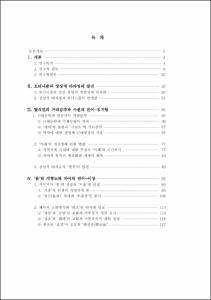
- Ⅰ. 서론 4
1. 연구목적 4
2. 연구사 검토 8
3. 연구방법론 22
Ⅱ. 모더니즘과 상상적 타자성의 발견 26
1. 모더니즘의 공간 욕망과 식민지적 타자화 26
2. 상상적 타자성과 모더니즘의 언어관 31
Ⅲ. 탈식민의 거리감각과 사변의 언어-김기림 36
1. 근대문학과 탈공간의 거리감각 36
⑴ 근대문학과 주체성립의 의지 36
⑵ ‘세계’의 출현과 ‘기상도’의 거리감각 57
⑶ 역사에 대한 절망과 근대풍경의 죽음 67
2. ‘미래’의 시간성에 관한 염원 77
⑴ 식민지적 근대에 대한 부정과 ‘미래’의 시간의식 77
⑵ 자아의 회복과 황폐화된 세계의 회복 82
3. 상상적 타자로서 ‘민족’의 발견 89
Ⅳ. ‘몸’의 지형도와 차이의 언어-이상 95
1. 식민지적 ‘몸’의 절망과 ‘거울’의 탄생 95
⑴ ‘거울’의 탄생과 식민지적 몸 95
⑵ ‘탈신(脫身)’ 욕망과 ‘외출중’인 분신 106
2. 쾌락의 소통방식과 ‘위조’된 타자의 얼굴 114
⑴ ‘혈청’과 ‘문벌’의 교환과 가부장적 식민 질서 114
⑵ ‘정조’와 ‘화폐’의 교환과 자본주의적 쾌락 욕망 118
⑶ 위조된 ‘표정’과 공포의 ‘번신술(翻身術)’ 127
3. 소외의 존재방식과 숭고미 135
⑴ ‘절름발이’와 ‘척각(隻脚)’의 존재방식 135
⑵ ‘여왕봉’과 ‘웅봉(雄蜂)’의 존재방식 140
⑶ ‘원숭이 흉내내기’와 ‘산호편(珊瑚鞭)’을 든 ‘조상’ 145
Ⅴ. 탈식민의 서사와 침묵의 언어-백석 150
1. 근대 풍경의 저항으로서 서사 150
(1) 자연 서사와 주체의 풍경 150
(2) 고독하지 않은 ‘외로움’과 어둡지 않은 ‘밤’의 서사 159
(3) 공포스럽지 않은 ‘무서움’과 슬프지 않은 ‘눈물’의 서사 165
2. 감각적 쾌락에 저항하는 경험 공간의 발견 171
(1) 변방의 발견과 가난하지 않은 ‘가난’의 경험 171
(2) 감각적 쾌락에 저항하는 근원적인 생의 행복 171
3. 타자성의 자아와 침묵의 언어 180
(1) 상상적 타자와 타자성의 자아 발견 180
(2) 제국 언어에 저항하는 ‘소리’의 발견 190
Ⅵ. 결론 201
참고문헌 209
- Degree
- Doctor
- Publisher
- 성신여자대학교 대학원
- 파일 목록
-
-
Download
 1930년대 모더니즘 시의 타자성 연구.pdf
기타 데이터 / 2.52 MB / Adobe PDF
1930년대 모더니즘 시의 타자성 연구.pdf
기타 데이터 / 2.52 MB / Adobe PDF
-
Items in Repository are protected by copyright, with all rights reserved, unless otherwise indicated.